Blinds and Shutters
Mónica Mays
15 May 2026 — 20 June 2026 15 White Street, New York, NY 10013
Fill your hands, you son of a bitch!
– John Wayne in True Grit
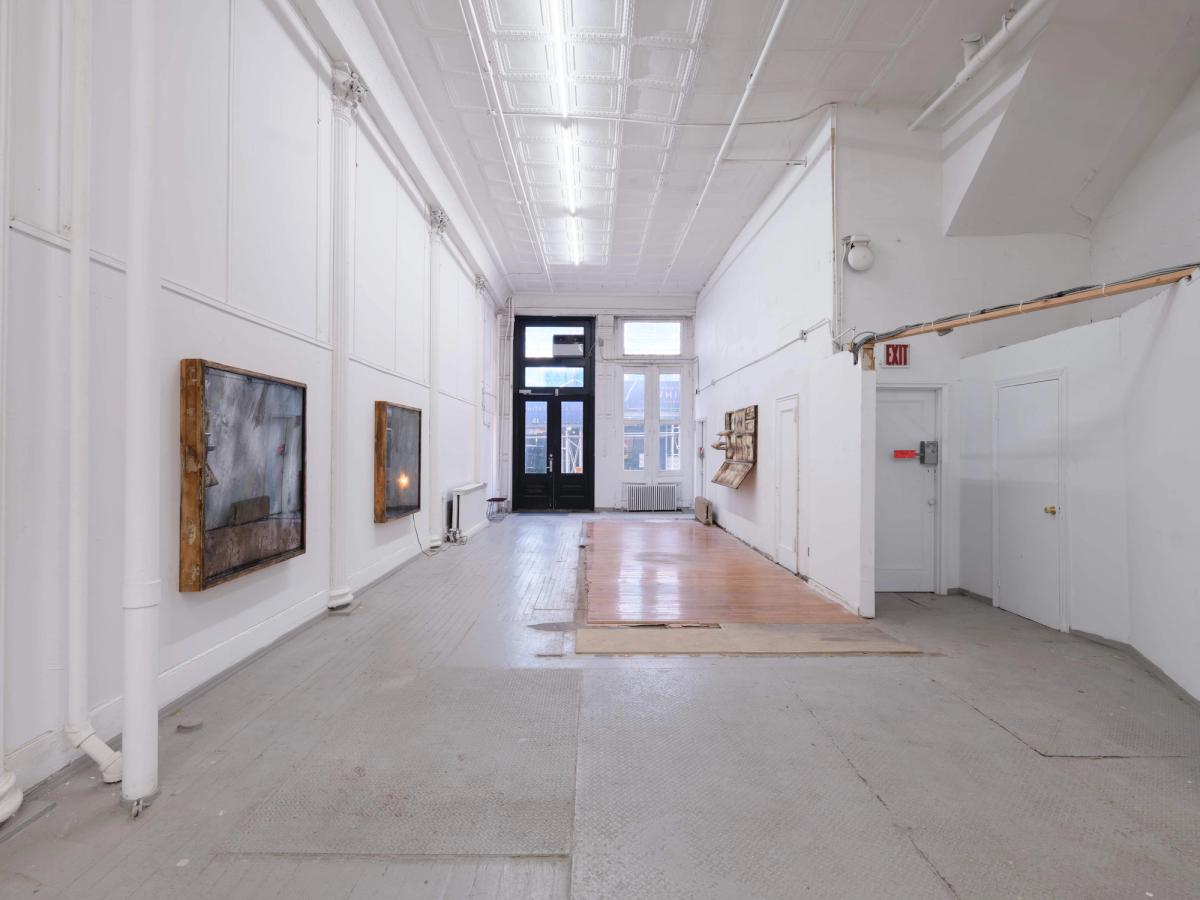
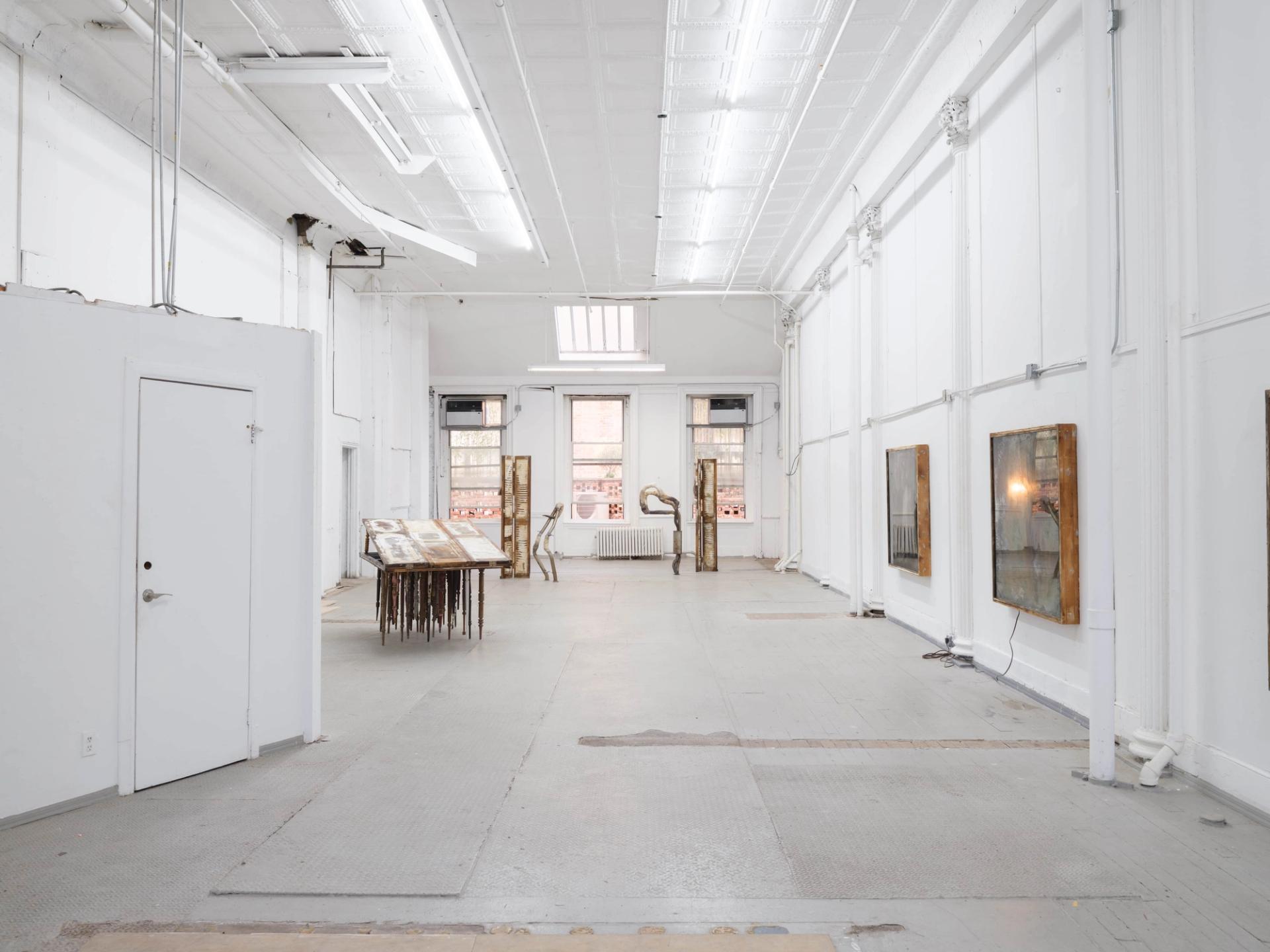
America, the fetish. America, the astral. America, the great giant dream-machine. In Blinds and Shutters–– the artist’s first solo exhibition in both America and with Gratin–– Mónica Mays engages with the American west, not as a historical fact but as it is a mythologized simulacrum: a circular system of images, fantasies, reproduced signs, gestures, surfaces, props… A reality which is composed by cinematic fantasy, seductive advertisements, power, violence, and desire. Mays presents works which transform the exhibition space into an active stage-set, where the western narrative-mirage is created as industrial debris, architectural structures, historical archives and fragmented bodies collapse and collide into one another.
The exhibition’s title plays on the semantic tension between “Blinds” and “Shutters”.“Blinds” implies concealment and obstructed vision (and perhaps even insinuates a refusal to see) whereas “Shutters” implies the framing, exposure, and the image-making production of a camera. This language of partial visibility, staged perception and created reality exists throughout the exhibition.
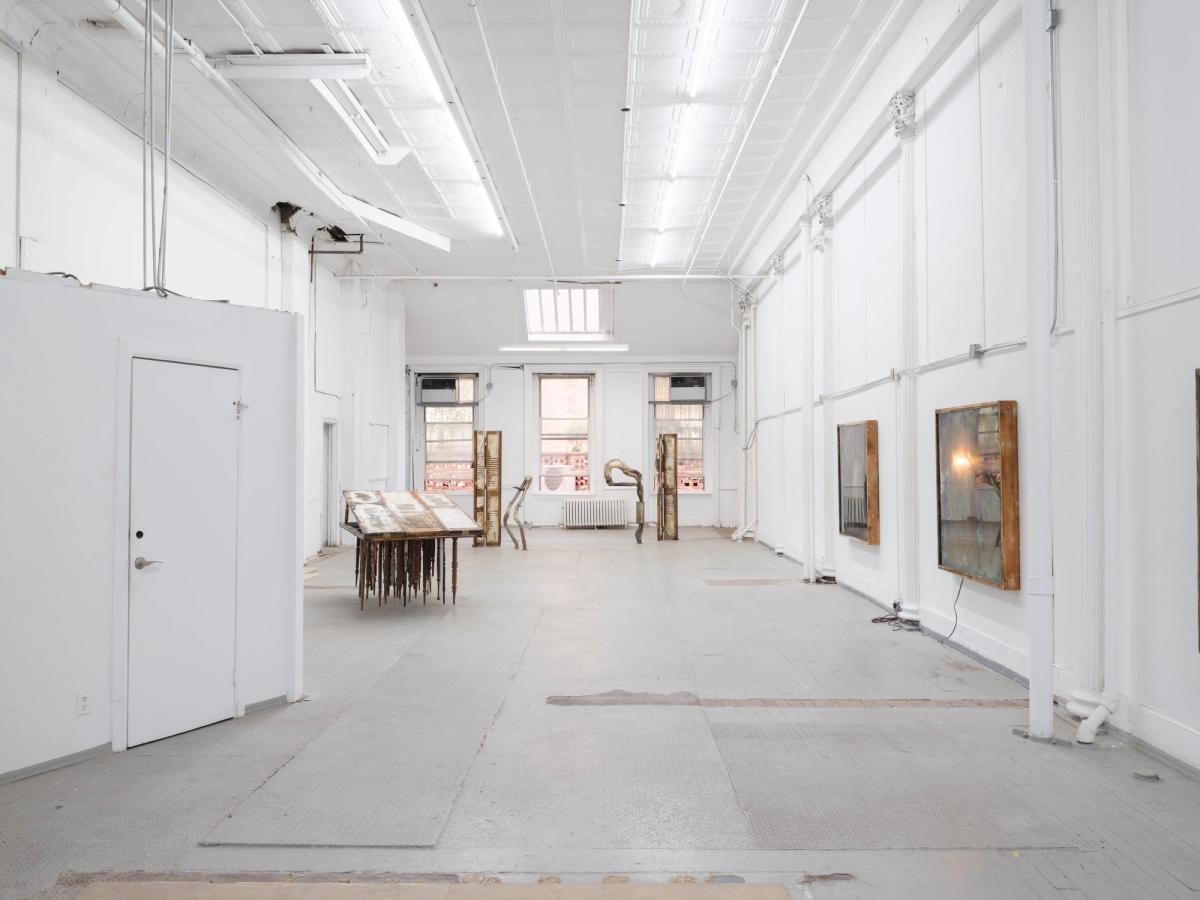
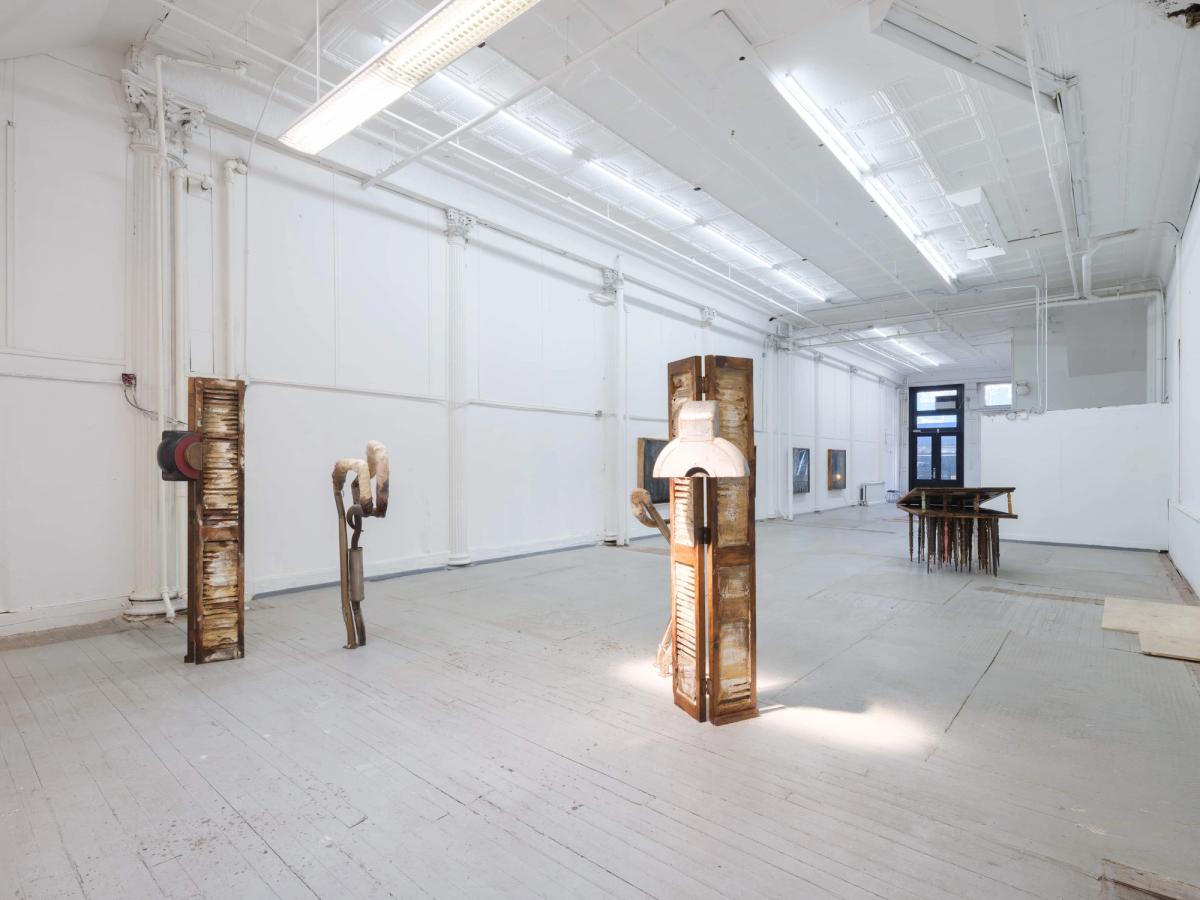
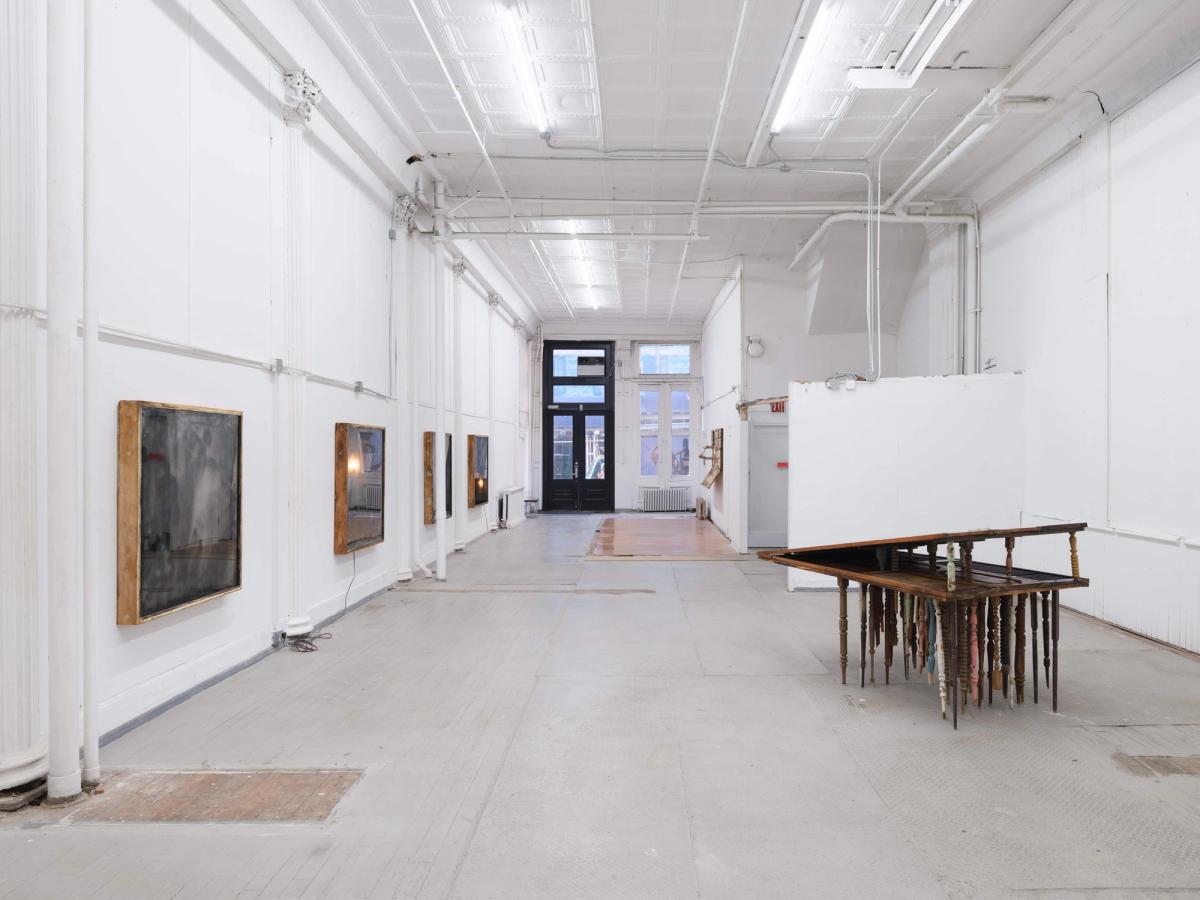
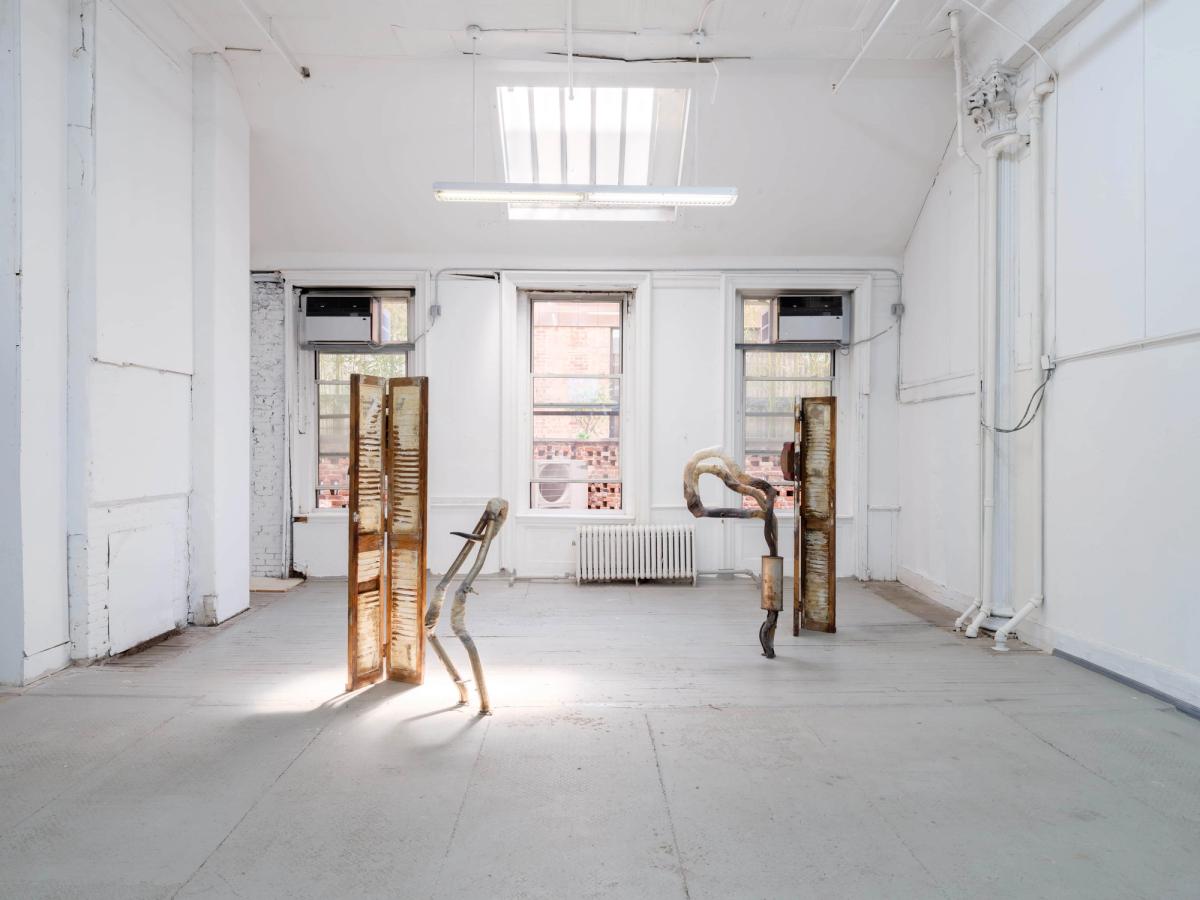
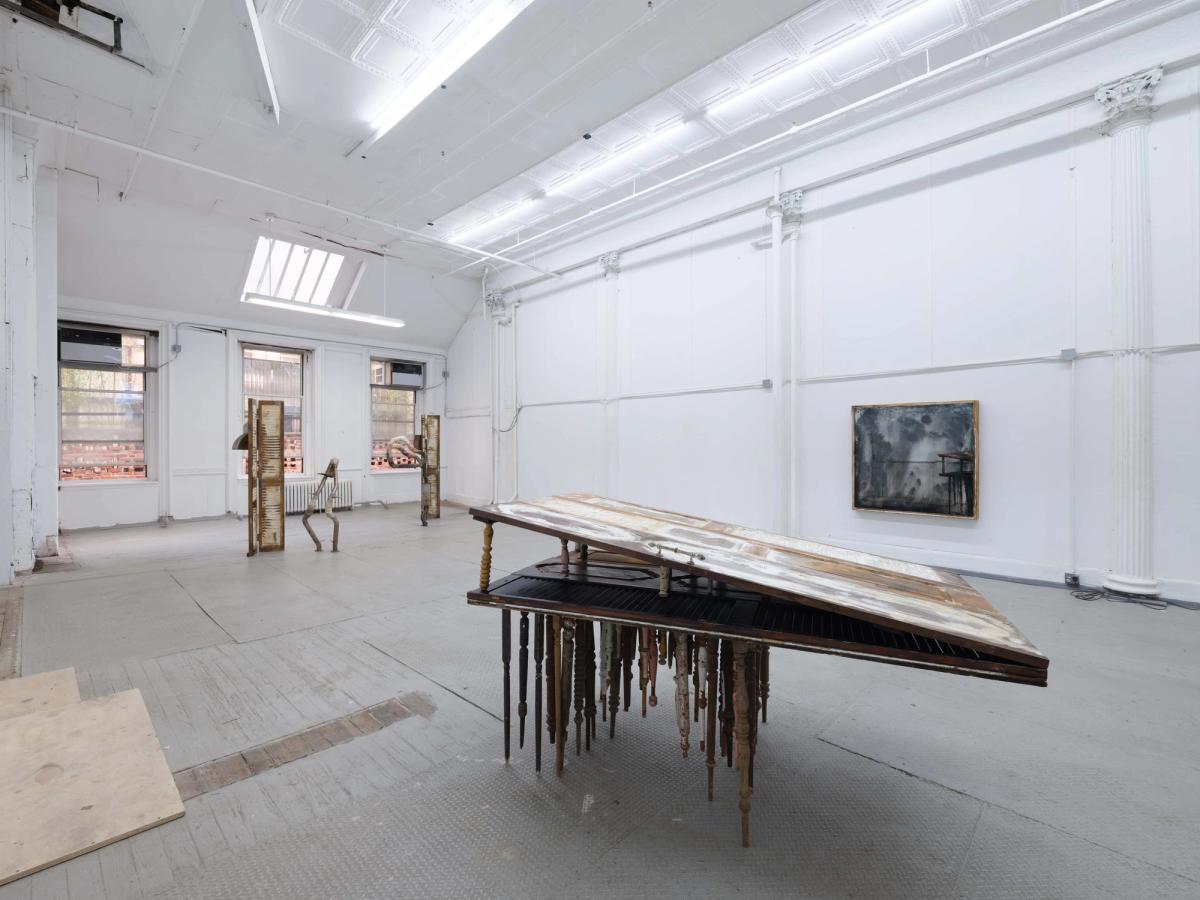
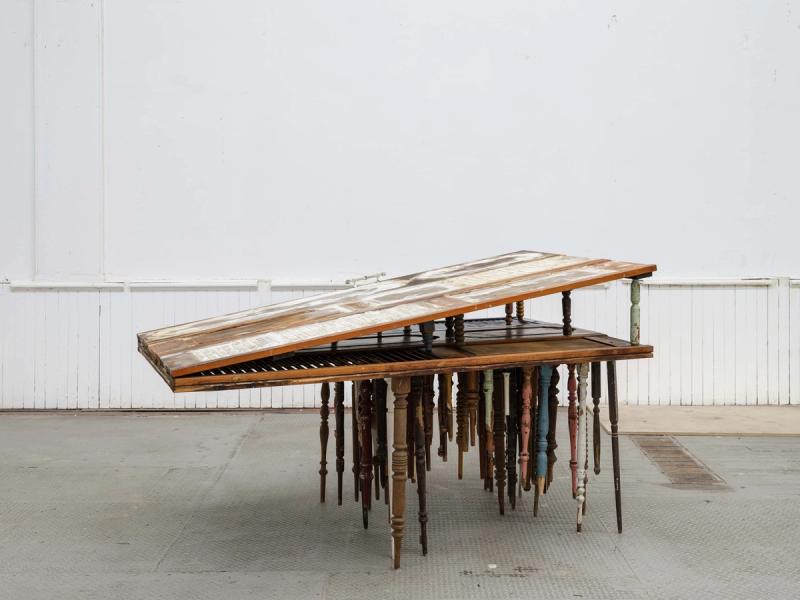
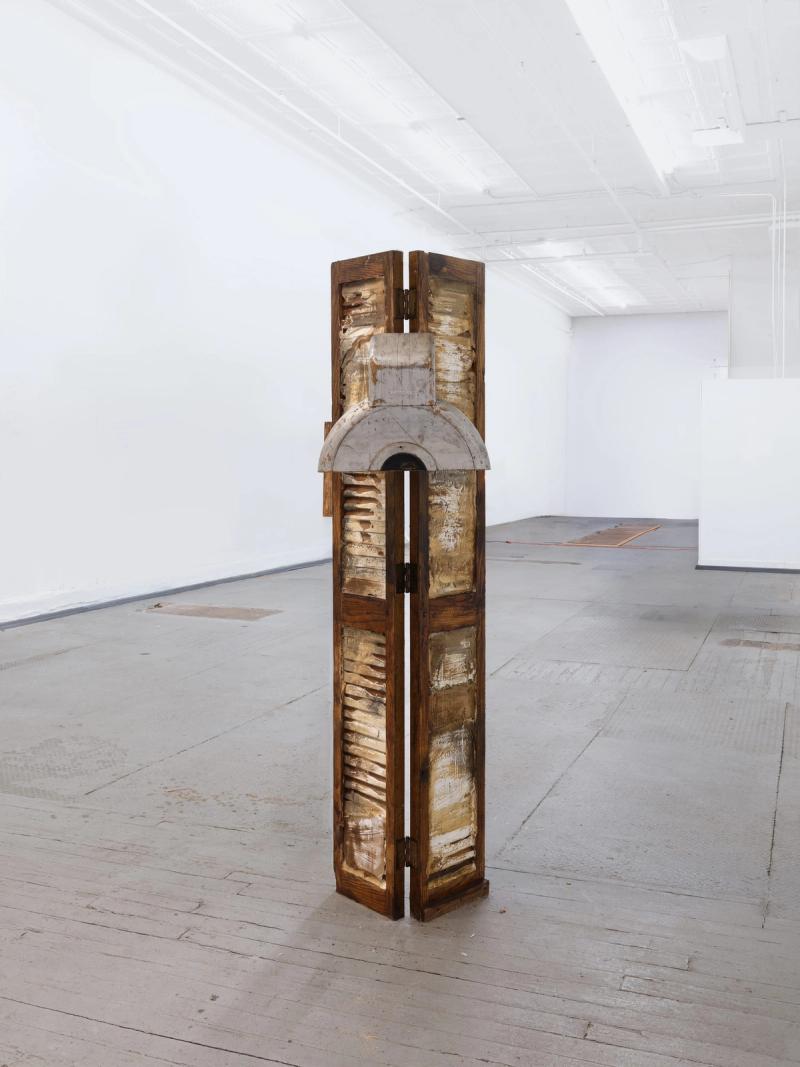
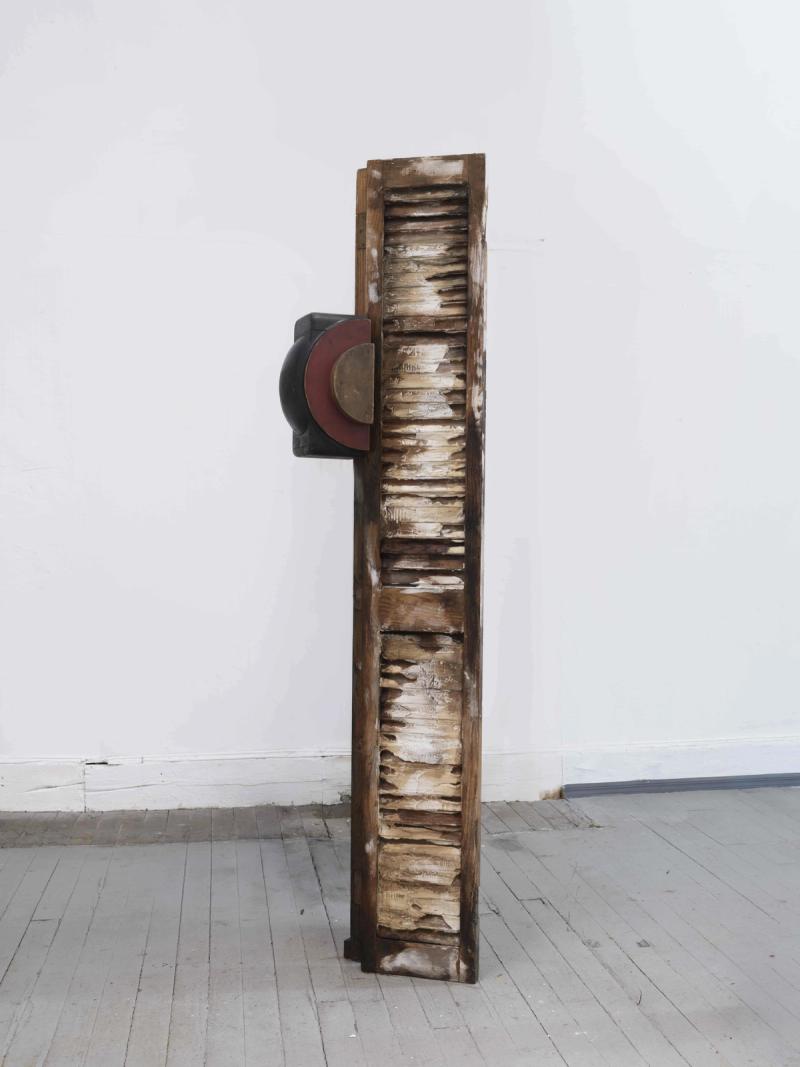
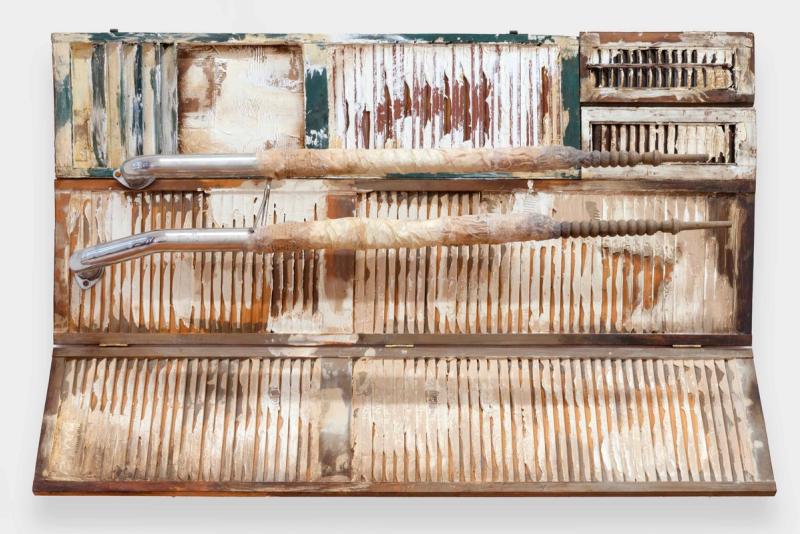
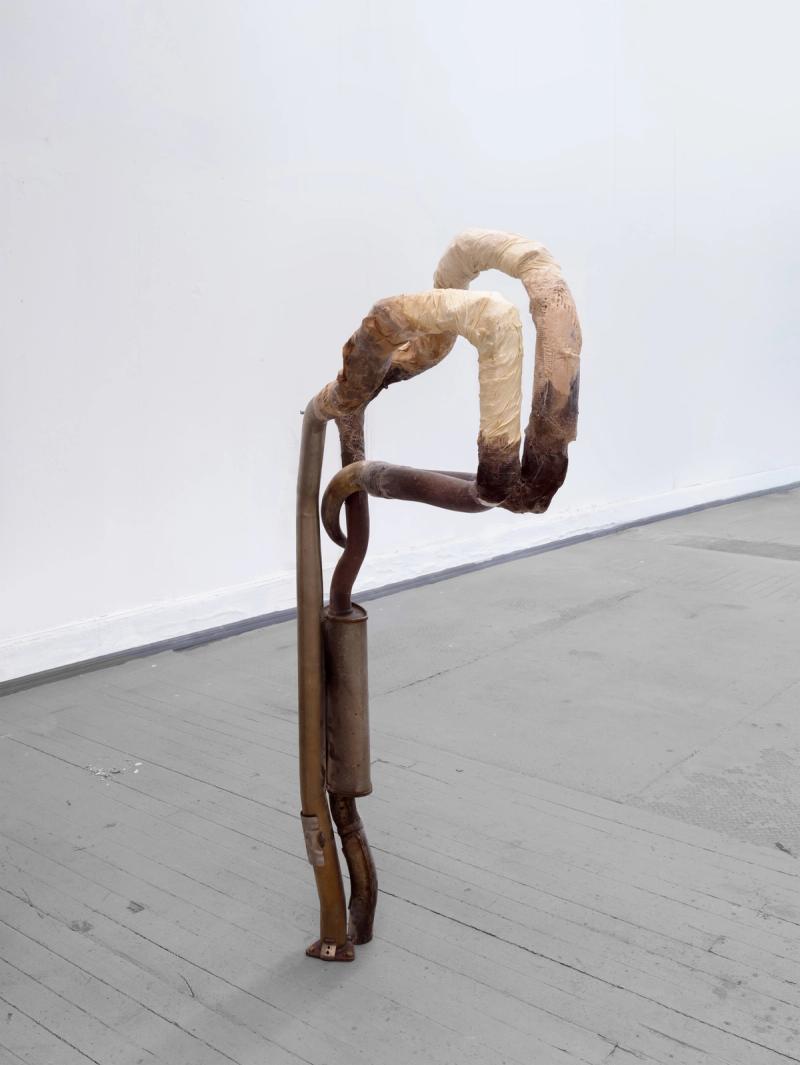
Mays’ compositions are constructed of found material residues from the theatre of the Western: saloon doors, shutters, mirrors, tar, feathers, animal hide, leather, exhaust pipes, saddles, foundry molds, carousel lights, and archetypal objects. The works presented oscillate between accumulation and collapse of material and form. Heavy industrial materials are coalesced with soft and smooth textures, reflective and wooden surfaces. The age in which the myth of the western exists is brought together with the age of industrialization; in fact, the fantasy of the wild west exploded at the same time in which it was already dead, that is when industrialization began. The time of the horse ended with the automobile.
The mythologized cowboy–– an all-american, armored with that pre-industrial masculinity, a symbol of self reliance and radical freedom–– is an idea that was assembled through Arab equestrian traditions, Mexican vaquero culture, Iberian colonial expansion, and Hollywood spectacle. By the time the western film appears, cowboys themselves disappeared–– yet the eroticism and fetishization of them perpetually grew. The body with that impenetrable masculinity, the costumes of leather, the ornamental gunfights and postures become objects of collective obsession and desire rather than historical fact. Masculinity becomes a rehearsed performance, a reproduced costume, and flamboyant spectacle–– another image circulating within the larger machinery of mythologized-reality. Fantasy and fiction preceding reality.
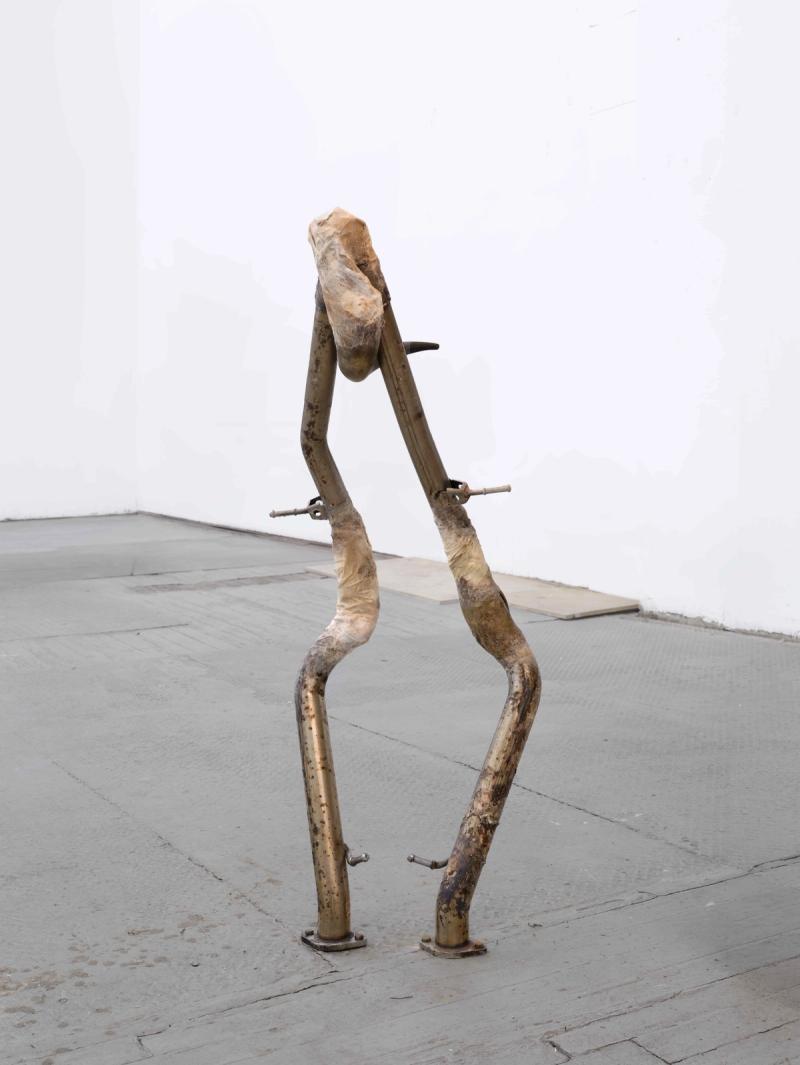
The exhibition unfolds through an associative formal language in which materials continuously shift between symbolic and bodily registers. Freestanding shutters operate as both backdrops and narrative structures–– theatrical thresholds against which bodies appear. Two curved exhaust pipes may resemble the form of horns, phallic appendages, animal bodies, weapons; elsewhere industrial elements become cinematic props or fetish objects. Mays resists fixed interpretation in favour of suggestion and accumulation, allowing the sculptures to exist through tension, proximity, and collision rather than narrative resolution.
What is revealed is a charged choreography of projections: seduction mingles with violence, theatricality with masculine domination, humor collides with rigidness, and archetypes circulate as perpetual associative images.
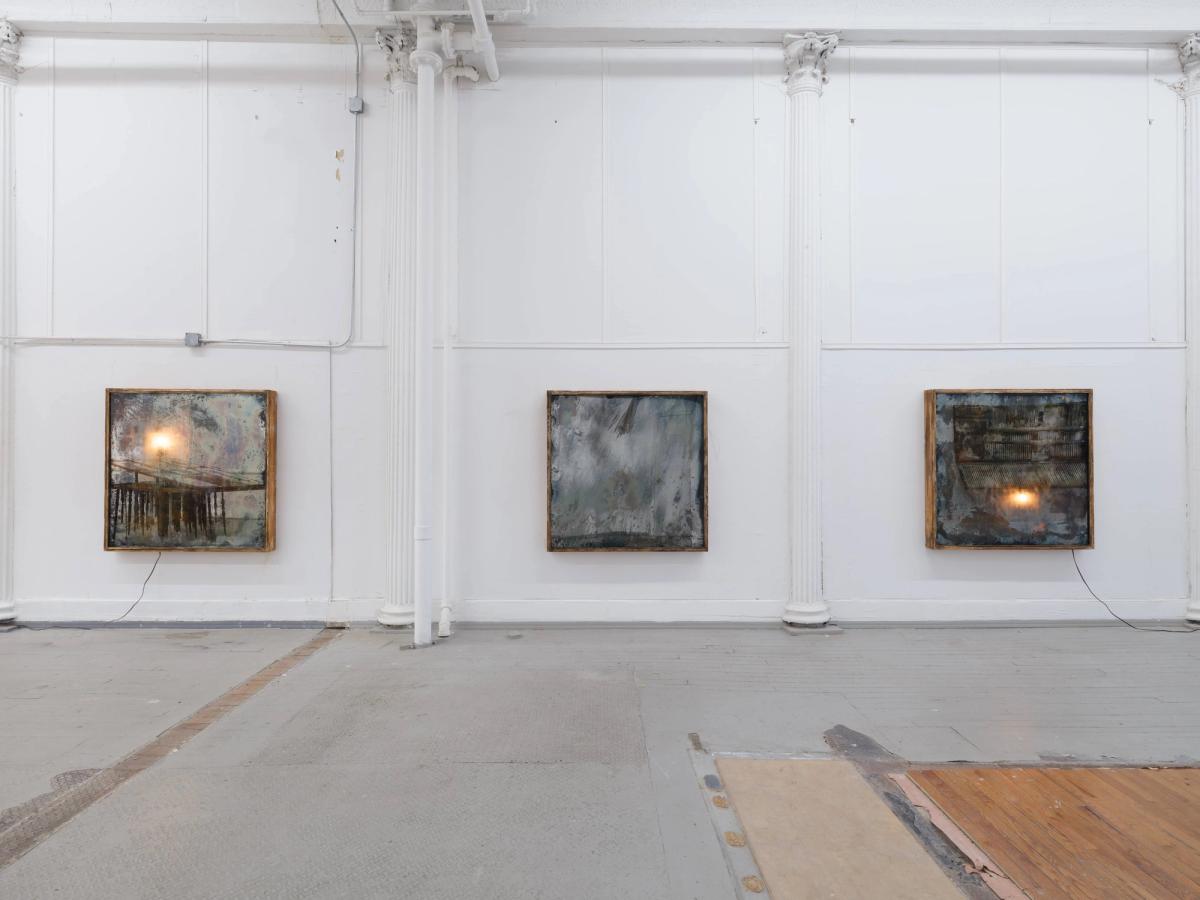
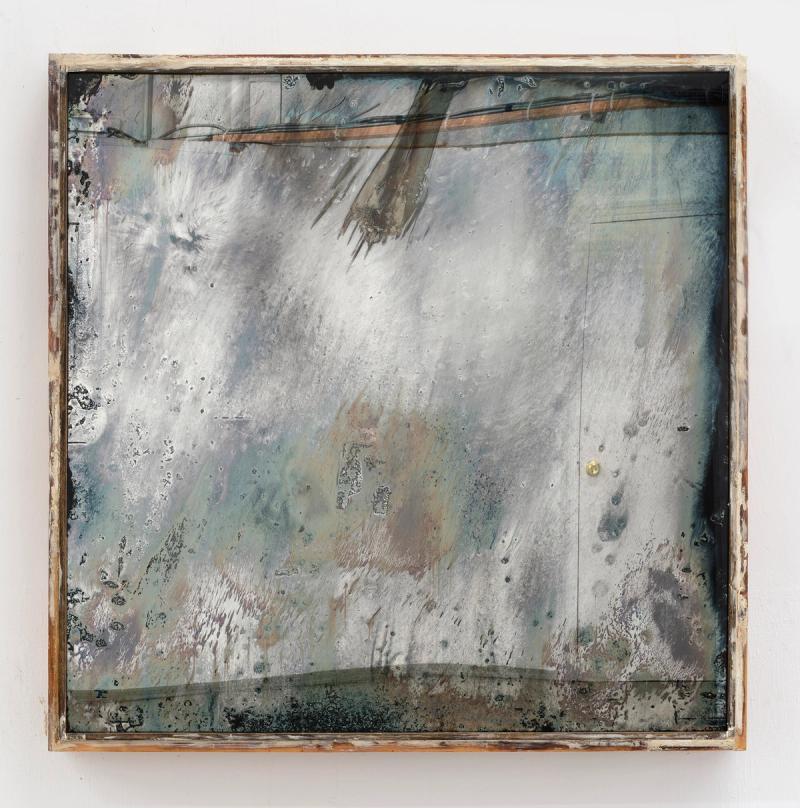
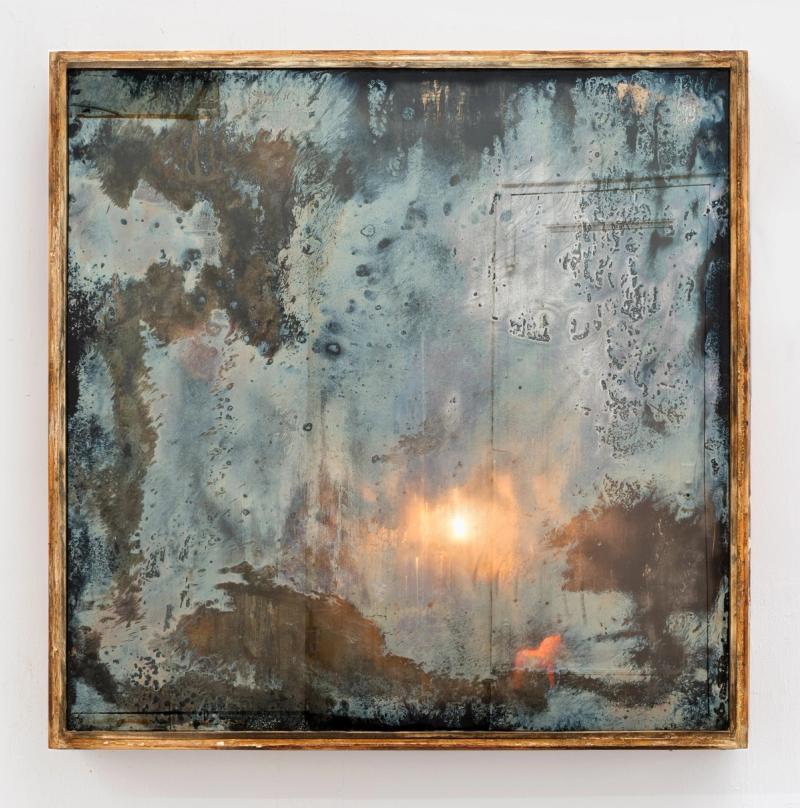
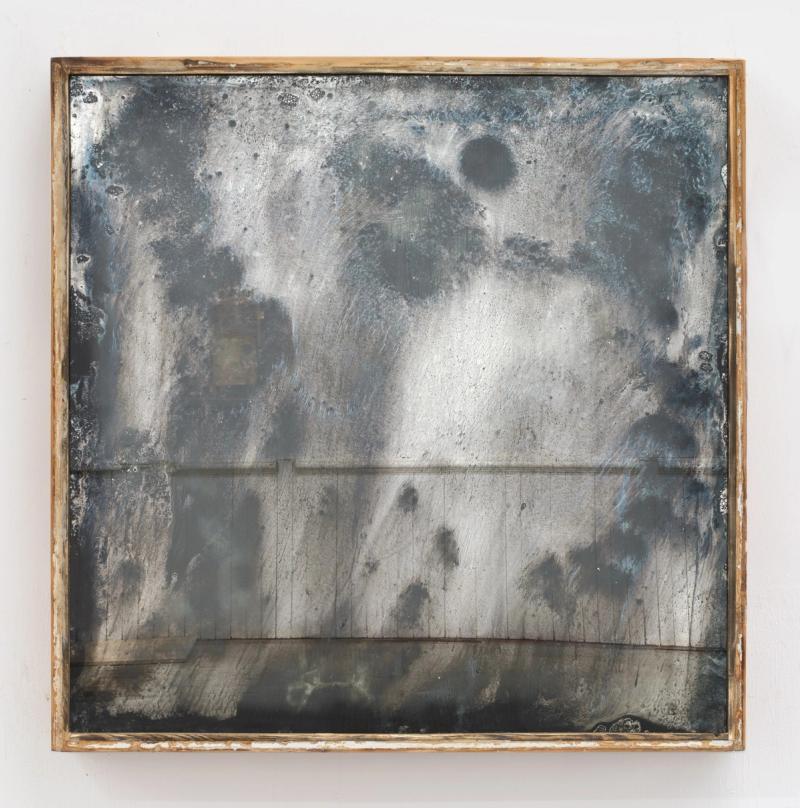
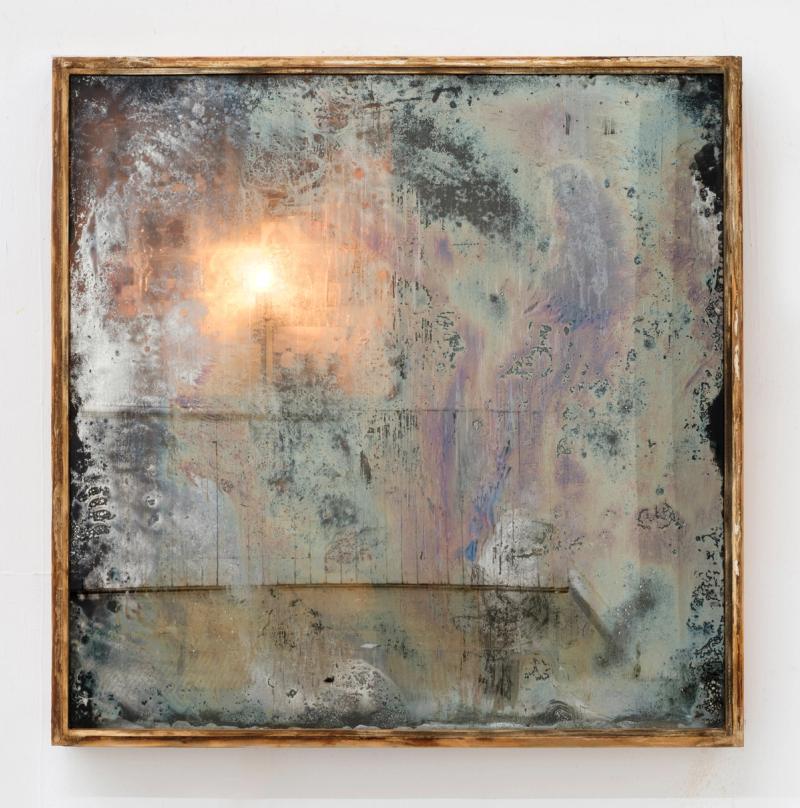
The series of mirrors were handmade and chemically aged by Mays using silver nitrate–– a process associated with early photographic development. Behind the glass, a carousel light gradually reveals found objects, photographs, toys, magazines. As viewers move around the works, they encounter both their own image and hidden objects. Reflection becomes entwined with projection; identity becomes entwined with myth. The mirrors evoke carnival mirror mazes, spaces of disorientation, theatricality, distorted self-identity.
Running through the exhibition is also the spectral logic of Percy Bysshe Shelley’s Ozymandias: the remains of power persisting as ruin, theatre, fantasy, echo. Mays’ installation appear as the after-images of collapsing mythologies, that is fragments of industrial modernity, frontier masculinity, cinematic fantasy, imperial spectacle as if they were relics from a civilization still performing its own image. The exhibition stages a world where monuments no longer stand intact, but survive instead as props, theatre, facades, remnants and distorted reflection. How tightly bound is reality and fantasy? Is there, in fact, ever a separation between the two? What is that historic America in your head?
–– Quentin McCarron
Works
Installation Views